
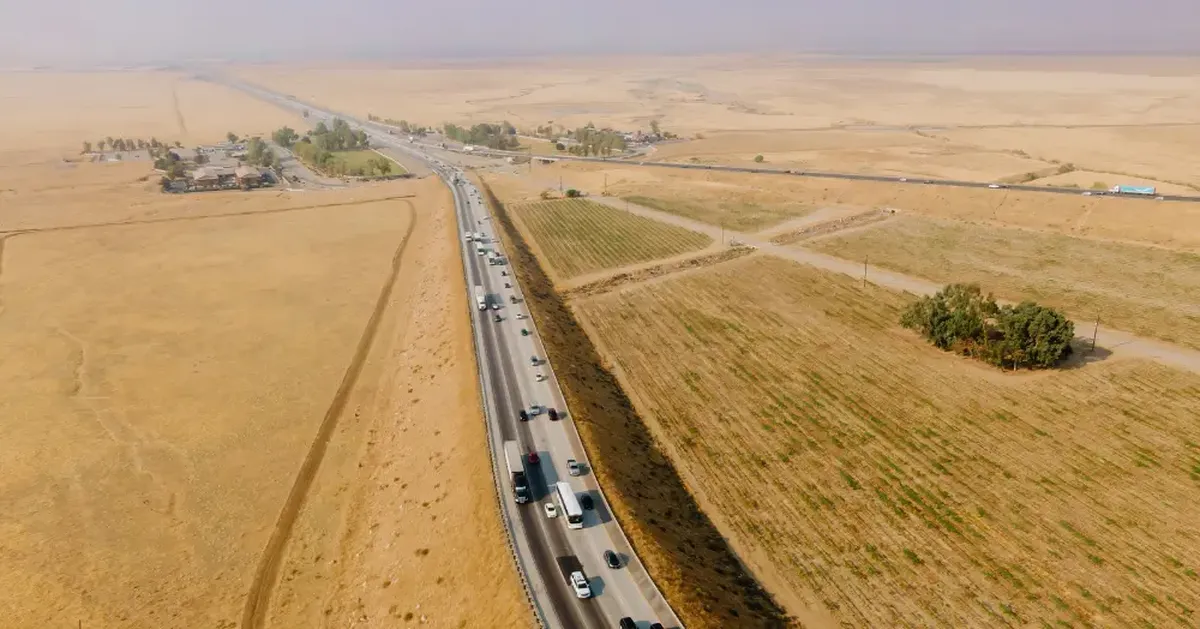
The U.S. federal government’s Congestion Mitigation and Air Quality (CMAQ) program offers funding to states for transportation initiatives designed to relieve traffic congestion and improve local air quality readings. CMAQ and transportation demand management (TDM) go hand in hand, but a complex and confusing program framework can sometimes inhibit organizations from taking full advantage of available funding opportunities.
Let’s demystify CMAQ and TDM by taking a look at how the federal program works and what it means for organizations building responsive commuter programs.
What is the CMAQ program and how does it work?
Introduced in 1991 and reauthorized in 1998 and 2005, the CMAQ program operates within the U.S. Department of Transportation’s Center for Climate Change. It has a multibillion-dollar funding budget, with state-level transportation departments, metropolitan planning organizations (MPOs), and transit agencies all qualifying for CMAQ investments for programs designed to mitigate transportation-related emissions.
Under federal rules, the CMAQ program is jointly administered by senior officials in the Federal Highway Administration (FHWA) and the Federal Transit Administration (FTA). The FHWA and FTA work together to:
Distribute funding to states, mainly based on the severity of the state’s transportation-related pollution and the size of the impacted population
Evaluate the funding eligibility of specific projects
Develop and issue guidance on procedural rules and use cases
If you’d like more information, you can learn all about the CMAQ program here.
Examples of CMAQ-funded programs
CMAQ administrators use multiple evaluation models to track program progress, including five-year snapshots. As of the time of writing, the most recent snapshot covered fiscal years (FY) 2016–2021. Here’s a high-level look at what the CMAQ program funded during that time:
Project Focus | Number of Funded Projects (2016–2021) | Total Funding Distributed (2016–2021) |
Bicycle and pedestrian infrastructure | 1,760 | $1.2 billion |
Alternative fuels and vehicles | 163 | $135.1 million |
Outreach and public education | 195 | $116.8 million |
Freight and intermodal transport | 26 | $32.2 million |
Source: Federal Highway Administration
For another perspective, let’s look at the 1,628 individual projects that received CMAQ funding in FY 2022. Here’s a detailed breakdown of where that funding went:
Project Type | Percentage of Total FY 2022 Funding |
Congestion reduction and traffic flow improvements | 41.6% |
Bicycle and pedestrian facilities and programs | 21.9% |
Surface transportation program (STP) CMAQ | 12.3% |
Transit improvements | 8.2% |
TDM | 4.6% |
Ridesharing | 3.9% |
Other | 7.4% |
Source: Federal Highway Administration
The data shows mixed news for TDM-focused organizations. On one hand, TDM and ridesharing projects both received significant CMAQ funding. On the other, TDM and ridesharing projects combined to account for just 8.5% of all funds disbursed. This suggests more advocacy is needed from the TDM community to help make transportation demand management a higher funding priority.
Can employers obtain CMAQ funding for TDM programs?
This is where things can get confusing. The FTA and FHWA recognize commuter incentive programs as qualifying for CMAQ funding. However, funding processes vary by state—and so does project eligibility.
Given the complex standards, your state’s transportation department is the best source of information. All state-level transportation agencies have a CMAQ representative available to field questions on project eligibility.
Employers play an important frontline role in helping to reduce traffic congestion and improve local air quality. If you’re looking to launch a commuter incentive program that could benefit from federal funding, check with the CMAQ point person at your state’s DOT for eligibility information.
As you consider commuter management solutions, look to RideAmigos’ CommuteHub platform. It’s loaded with effective, customizable features that empower employers to offer the kind of personalized commuter programs that generate buzz and inspire participants.